Endoscopic Spine Surgery
What is a lumbar endoscopic laminectomy/discectomy?
An endoscopic lumbar laminectomy or discectomy is one of the newest, least invasive options available for treating pinched nerves in the spine. The procedure is performed through an incision no larger than the tip of a pen, using a tiny camera (endoscope) to guide the surgeon—similar to how arthroscopic cameras are used in knee surgery. This allows bone spurs or herniated disc material compressing the nerves to be precisely removed with minimal disruption to surrounding tissues.
Importantly, the spinous process is kept intact, and there is no stripping of the paraspinal muscles as is typically required in traditional open spine surgery. By preserving normal anatomy and avoiding muscle detachment, this approach helps reduce postoperative pain and supports a faster recovery.
Dr. B has completed the ISSLS clinical traveling fellowship and gained further advanced training in spinal endoscopy from leading experts at Wooridul Spine Hospital in Seoul, South Korea, considered one of the leading institutions in the world for endoscopic spine surgery. Today, Dr. B is one of only a select few spine surgeons in the Boston area offering both uniportal and biportal endoscopic spine surgery, two of the most advanced, cutting-edge techniques in minimally invasive spine care.
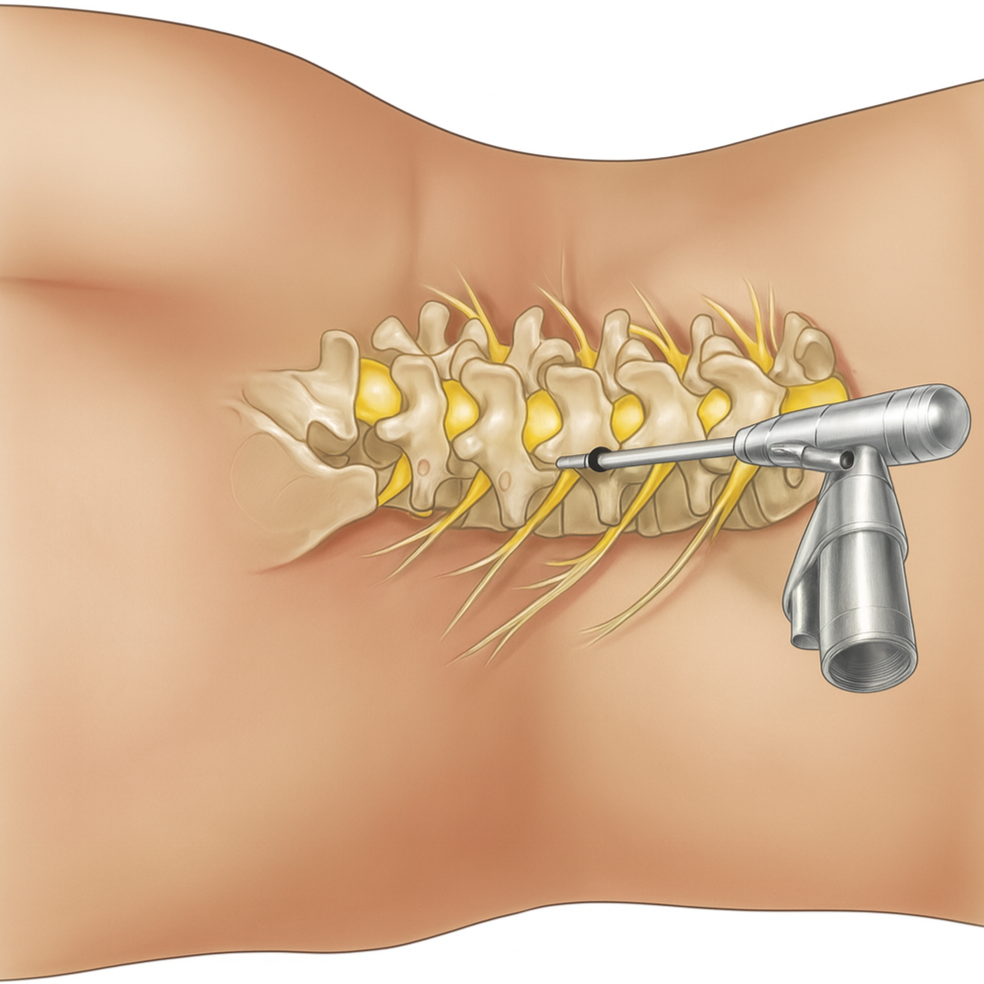
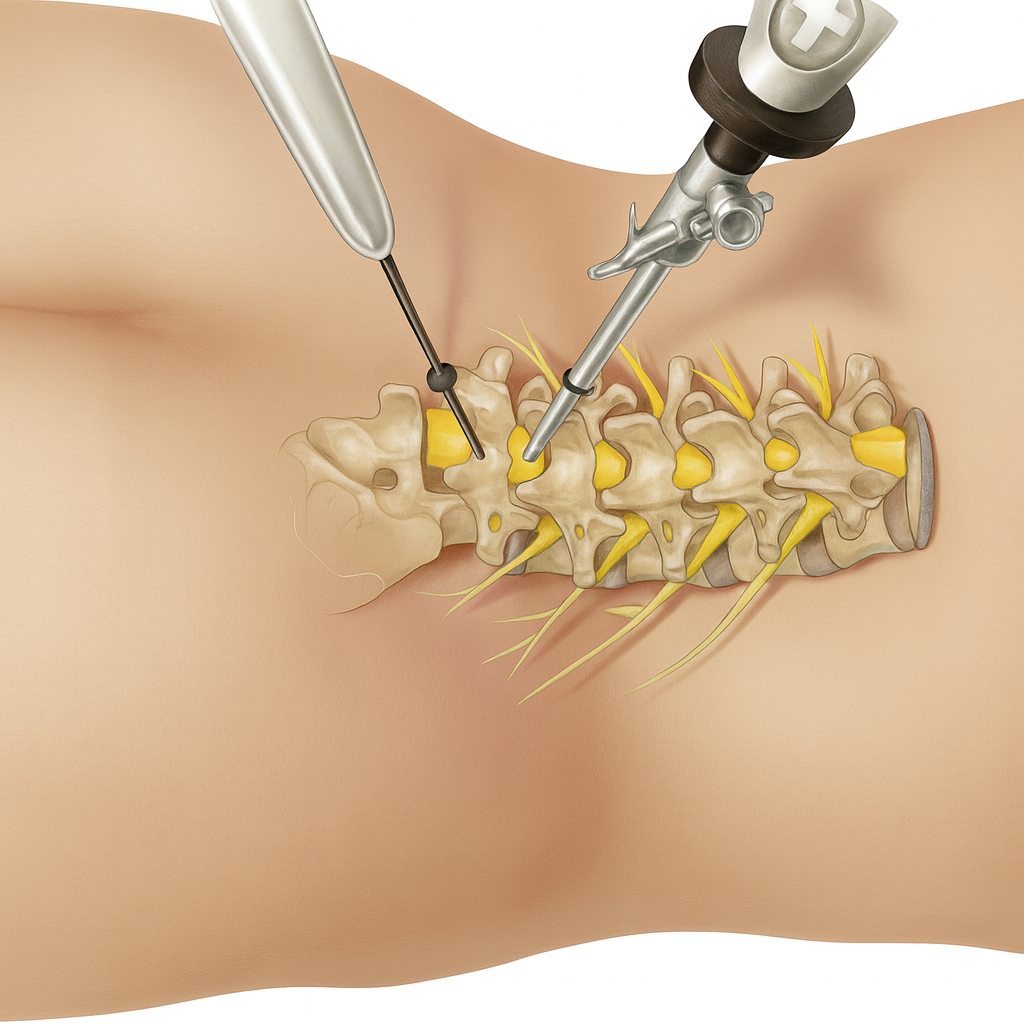
-
A lumbar endoscopic laminectomy or discectomy may be recommended for patients who:
Have a herniated lumbar disc or lumbar spinal stenosis causing nerve compression.
Experience sciatica (leg pain), numbness, tingling, or weakness that interferes with daily activities.
Have not improved with conservative treatments such as medications, physical therapy, or injections over several weeks to months.
Prefer a minimally invasive approach that allows smaller incisions, less muscle damage, and quicker recovery compared to traditional open surgery.
In urgent cases, develop progressive weakness or sudden changes in bladder or bowel control (which may require more immediate surgery).
Not all patients are suitable candidates for a lumbar endoscopic laminectomy or discectomy. Dr. B will review your condition and perform a thorough evaluation to determine whether an endoscopic approach is appropriate for you.
-
A lumbar endoscopic laminectomy or discectomy is performed through a very small incision in the lower back, typically less than a centimeter. Through this incision, Dr. B inserts a thin tube called an endoscope, which has a camera and light to provide a magnified view of the spine. Specialized surgical instruments are then used—either through the endoscope or a separate tiny incision—to access the herniated disc or the area of spinal canal narrowing. Dr. B carefully removes the portion of bone or disc material that is compressing the nerves under this enhanced visualization.
Importantly, the spinous process is kept intact, and there is no stripping of the paraspinal muscles as is typically required in traditional open spine surgery. By preserving normal anatomy and avoiding muscle detachment, this approach minimizes tissue disruption.
Once the procedure is complete, the instruments and endoscope are removed, and the tiny incision is closed with a stitch or surgical adhesive. This minimally invasive technique leads to less muscle and tissue injury, reduced blood loss, a smaller scar, and a quicker recovery compared to traditional open surgery.
Most patients are able to return home the day of surgery.
-
The advantages of a lumbar endoscopic laminectomy or discectomy include:
Minimally invasive: Performed through a very small incision, reducing tissue trauma.
Less muscle damage: Preserves surrounding muscles compared to open surgery. The spinous process is kept intact, and there is no stripping of the paraspinal muscles.
Reduced blood loss during the procedure.
Smaller scar due to the tiny incision.
Shorter hospital stay – often done as an outpatient procedure.
Faster recovery – patients can return to daily activities sooner.
Lower postoperative pain and reduced need for narcotic pain medications.
Precise visualization of the spine through the endoscope, allowing targeted removal of the problematic disc or bone.
-
Please refer to our Patient Education Booklet for detailed information.
Disclaimer: All materials presented on this website are the opinions of Dr. Patawut “Pat” Bovonratwet, or Dr. B, and any guest writers, and should not be construed as medical advice. Each patient’s specific condition is different, and a comprehensive medical assessment requires a full medical history, physical exam, and review of diagnostic imaging. If you would like to seek the opinion of Dr. B for your specific case, we recommend contacting our office to make an appointment.